SAP EWM Cross-Docking Learn Real-Time Warehouse Processes
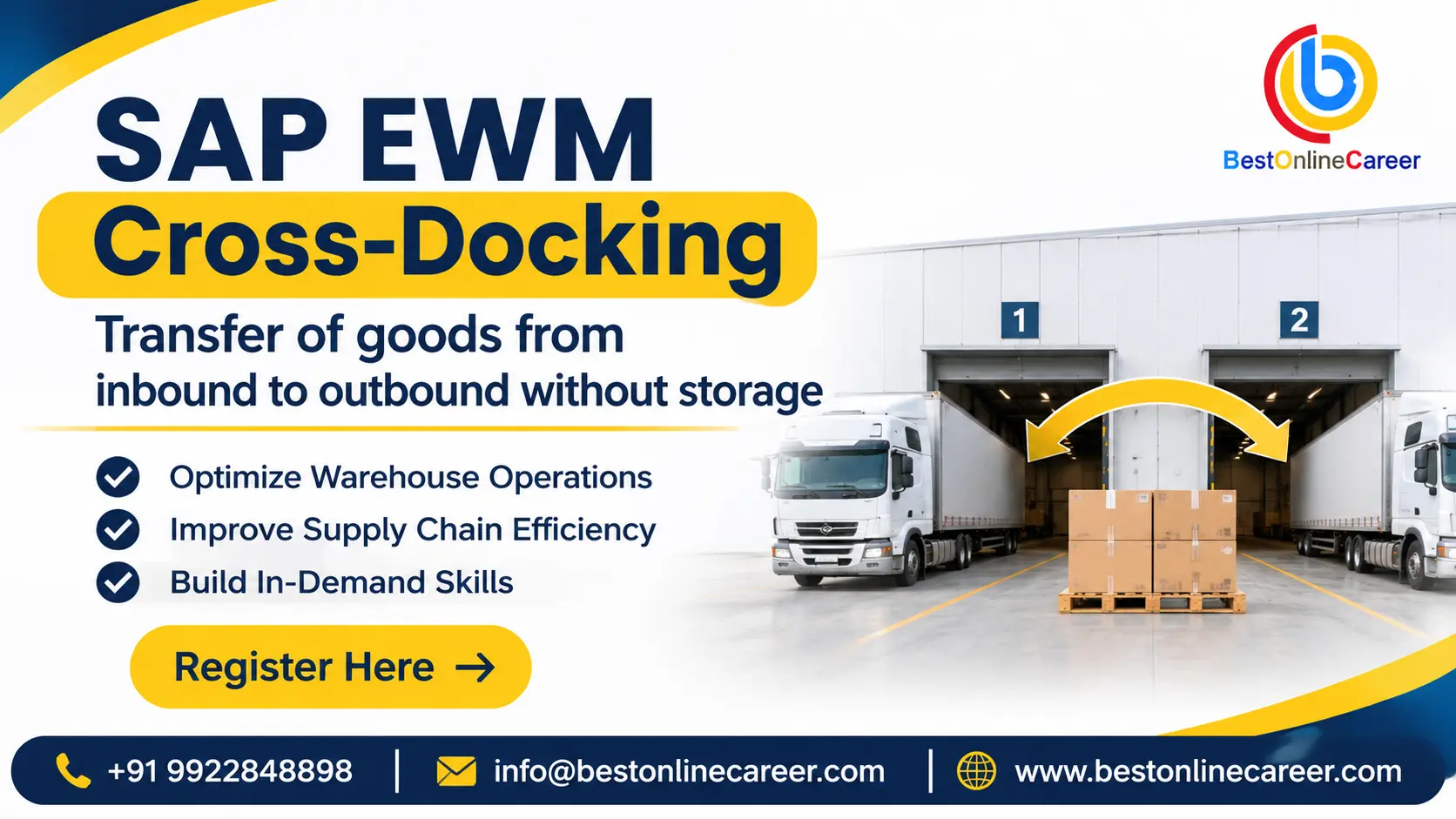
SAP EWM Cross-Docking: Learn Real-Time Warehouse Processes with Best Online Career
Imagine a warehouse that receives a shipment in the morning and must deliver it to customers the same day. What if the warehouse could move products directly from receiving to shipping instead of putting them into storage and holding them before picking them again? This is the difference cross-docking makes.
As companies seek to improve warehouse speed and inventory management, understanding cross-docking has become an important skill for warehouse professionals. Best Online Career offers a practical SAP EWM course that helps learners understand how cross-docking works, how it connects inbound and outbound operations, and how companies use it to improve warehouse efficiency.
Let's understand the process, its types, configuration basics, and how you can build practical SAP EWM knowledge.
What Is Cross-Docking in SAP EWM?
Cross-docking is a warehouse process in SAP Extended Warehouse Management (SAP EWM) in which incoming goods are transferred to an outbound delivery directly or after a minimum storage period.
In a traditional warehouse process, goods are received, put away into storage bins, picked when an order comes in, packed, and finally shipped.
With cross-docking, the system identifies items needed for outbound orders and helps transfer them to the shipping area without completing the full storage and picking cycle.
Example of Cross-Docking
Imagine 100 cartons of a particular product are received by a retail distribution centre. At the same time, various stores have already placed orders for that product.
The warehouse can send the necessary quantities to the respective outbound deliveries instead of storing all 100 cartons and picking them again.
This reduces unnecessary warehouse movements, storage requirements, and time spent processing orders.
How Does SAP EWM Cross-Docking Work?
Cross-docking connects inbound and outbound warehouse activities. The exact steps depend on the cross-docking scenario and warehouse configuration, but a typical process includes the following stages.
1. Inbound Delivery Creation
The process begins with the warehouse receiving information about incoming goods. An inbound delivery is created in the system with details such as product, quantity, supplier, and expected arrival.
2. Goods Receipt
When the shipment arrives at the warehouse, the team performs goods receipt activities. The delivered quantity is checked against the delivery information.
3. Identifying Outbound Requirements
SAP EWM checks the incoming products against existing outbound orders. The system may use configured cross-docking rules to determine whether the goods are suitable for direct movement.
4. Cross-Docking Decision
Based on the selected process and configured settings, the system determines whether the goods can move directly towards the outbound process or whether they require normal warehouse storage.
5. Warehouse Movement
The warehouse team performs the generated warehouse tasks to move products from the receiving area to the specified outbound staging area.
6. Outbound Delivery and Shipping
Once the goods arrive at the correct staging area, the warehouse performs the necessary packing, loading, and shipping activities.
The result is a smoother flow of goods from receiving to delivery.
Types of Cross-Docking in SAP EWM
If you are planning to work on SAP warehouse projects, understanding different cross-docking methods is important.
1. Planned Cross-Docking
Planned cross-docking means the warehouse already knows about the incoming goods and their outbound requirements.
The inbound and outbound requirements are coordinated so that products can move directly to the corresponding outbound process.
Example: A retail company receives products from a supplier to fulfil store orders that have already been created.
2. Opportunistic Cross-Docking
Opportunistic cross-docking identifies opportunities during warehouse operations.
For example, goods arrive at the warehouse and the system detects that part of the received stock is already needed for an existing outbound demand.
The warehouse can apply the configured process to direct suitable goods towards outbound requirements instead of automatically following the standard putaway process.
Both approaches help reduce unnecessary storage activities, but their planning and execution requirements differ.
SAP EWM Cross-Docking Configuration: What Should You Know?
SAP EWM consultants should understand the business process, but knowing the configuration behind it is equally valuable.
Important Configuration Areas
- Types of cross-docking processes and their business purpose.
- Inbound and outbound delivery integration.
- Warehouse process types and warehouse activities.
- Stock availability and requirement matching.
- Warehouse staging areas and storage process configuration.
- Exception management and monitoring.
The exact setup depends on the chosen cross-docking method, SAP EWM version, and project requirements.
During practical SAP EWM training, learners should understand the logic behind a particular configuration instead of simply memorising configuration steps.
Real-Time Project Scenario in SAP EWM
Let's take an example of an automobile spare parts warehouse.
A supplier delivers 500 brake components to a warehouse. At the same time, an outbound delivery requires 200 of those components for a customer order.
In a standard warehouse process, the company could store all 500 components and pick 200 for the outbound order later.
With a suitable cross-docking setup, the warehouse can move the required 200 components towards outbound staging while the remaining 300 components follow the appropriate storage process.
Benefits of This Process
- Minimises unnecessary product movements.
- Accelerates order fulfilment.
- Reduces pressure on storage space.
- Improves coordination between receiving and shipping.
- Supports faster warehouse operations.
This kind of business scenario is useful for understanding how SAP EWM supports real warehouse requirements.
Common Cross-Docking Problems in SAP EWM
Cross-docking can improve warehouse efficiency, but incorrect handling of the process can create operational problems.
Ready to Start Your Learning Journey?
Join thousands of learners and build your future with expert-led courses and 100% practical training.
Expert Guidance
Learn from industry experts
Trusted & Recognized
Top-rated by learners
Flexible Learning
Online options
Placement Support
Career support & more
1. Incorrect Delivery Information
It can be difficult to align incoming products with outbound requirements when inbound quantities or product information are incorrect.
2. Stock Availability Problems
Products may not be available in the expected quantity or condition.
3. Warehouse Task Errors
Incorrect warehouse process settings can affect the movement of products.
4. Outbound Delays
If staging and shipping activities are not coordinated properly, outbound deliveries can be delayed.
5. Configuration Issues
Incorrect process settings may prevent the expected cross-docking flow.
Practical exercises that cover these situations help learners prepare for real SAP EWM project responsibilities.
Why Choose Practical SAP EWM Training?
Reading about SAP warehouse management is a good starting point, but working with real business scenarios is what builds confidence.
A structured online SAP EWM course helps learners understand how warehouse operations are managed using SAP.
What Will You Learn in SAP EWM Training?
- Inbound and outbound delivery processing.
- Goods issue and goods receipt.
- Putaway and picking strategies.
- Warehouse task and warehouse order management.
- Storage types, bins, and sections.
- Replenishment and physical inventory.
- Cross-docking and warehouse process integration.
- SAP S/4HANA EWM concepts.
- Hands-on exercises and real-time project scenarios.
Whether you are looking for SAP EWM online training, a SAP warehouse management course, or warehouse management training, look for a programme that provides practical system exposure.
You can also ask for SAP EWM training material PDF, course content, batch schedules, and demo details before enrolment.
If you are interested in related SAP supply chain modules, explore the SAP MM training course and SAP SD training course to understand how procurement and sales processes connect with warehouse operations.
Who Should Enrol in an SAP EWM Course?
SAP EWM is useful for professionals who want to upgrade their knowledge of warehouse operations and SAP supply chain processes.
The Course Is Relevant For:
- Freshers who want to start a career in SAP.
- SAP WM consultants looking to improve their skills.
- SAP MM and SD professionals interested in warehouse integration.
- Logistics and supply chain professionals.
- Working professionals planning a career change.
- SAP consultants involved in S/4HANA implementation projects.
If you are searching for an SAP EWM course in India, SAP EWM course in Bangalore, or SAP EWM course near me, consider the trainer's project experience, practical sessions, course coverage, and learning support before enrolling.
Frequently Asked Questions About SAP EWM
1. How Long Will It Take to Learn SAP EWM?
The learning time depends on your previous SAP knowledge, technical background, and practice schedule. Many learners can understand the fundamentals within a few weeks, while developing project-level confidence requires additional hands-on practice.
2. Is SAP EWM in High Demand?
SAP EWM is an important skill in warehouse management and supply chain operations, particularly for organisations using SAP S/4HANA. Opportunities depend on project requirements, experience, and practical knowledge.
3. Does SAP EWM Require Coding?
No. Functional SAP EWM consultants generally do not need programming skills for their core responsibilities. However, basic ABAP knowledge can be helpful when working with technical teams, enhancements, or debugging requirements.
4. Is SAP EWM Easy to Learn?
The basic warehouse concepts are relatively easy to understand if you know inventory and logistics operations. Advanced configuration, integration, and project scenarios require regular practice.
5. What Are the SAP EWM Course Fees?
SAP EWM course fees vary depending on course duration, training format, practical sessions, and support. Contact Best Online Career to get the latest fee details and available batch information.
6. Is There a Free SAP EWM Course?
You can start with free introductory learning resources and SAP documentation to understand the basics. However, structured training with practical system access and trainer guidance may be useful for developing job-related skills.
7. What Does SAP EWM Course Content Include?
A comprehensive course should cover warehouse structure, inbound and outbound processing, goods movement, picking, putaway, replenishment, warehouse tasks, cross-docking, physical inventory, and integration with SAP S/4HANA.
8. Is SAP EWM Certification Necessary?
SAP EWM certification can help demonstrate your understanding of the subject. However, practical knowledge, system experience, and the ability to explain real-time warehouse scenarios are also important for career opportunities.
Start Learning SAP EWM with Best Online Career
Understanding cross-docking is one step towards learning how modern warehouses operate. From inbound delivery processing to outbound staging, SAP EWM helps businesses coordinate warehouse activities and manage goods more efficiently.
If you want to build practical knowledge, explore the SAP EWM course at Best Online Career. Learn important warehouse processes, configuration concepts, and real-time project scenarios with guided training.
Whether you are a fresher, working professional, or SAP consultant, the right SAP EWM training can help you prepare for opportunities in warehouse management and supply chain technology.
Enrol Now for a Free SAP EWM Demo
Get SAP EWM course content, latest course fees, training details, and a free demo session. Contact Best Online Career today.
Register for your free demo: Get SAP EWM Course Details and Book Your Free Demo
Contact Best Online Career
Website: www.bestonlinecareer.com
Email: info@bestonlinecareer.com
Phone: +91 9922848898
Continue your SAP EWM learning experience with hands-on, career-focused training at Best Online Career.
Related SAP Training Courses
Tags
Share this article
Help others discover this valuable SAP content