
Advanced SAP ABAP Interview Questions for Experienced Developers

Advanced SAP ABAP Interview Questions for Experienced Developers
To get your ideal SAP ABAP job, you will need to attain more than technical requirements. You will also need to understand the concepts and the coding, and be able to explain your solutions. The following is meant to aid you in understanding the SAP ABAP interview questions for experienced developers, covering the basics and moving onto Advanced ABAP on HANA optimization.
How to Understand the Questions for an SAP ABAP Developer Interview
SAP ABAP (Advanced Business Application Programming) is the programming language that most SAP enterprise applications still rely on. Whether you are interviewing for a dear position or moving onto ABAB on HANA development, you will need to conduct extensive preparation in a variety of topics.
Basic Questions and Their Answers in an ABAP Interview
1. What are the major distinctions among Internal Tables, Work Areas, and Structures?
Answer: Internal tables are a type of data structure that is able to accommodate a multitude of records and is able to be altered during the period the program is being run. Work areas are used to temporarily set aside single lines of data to, in this case, process a specific record from the internal tables. Structures are a type of user defined data sets that describe the structure of a particular set of fields, and not hold data themselves. It is important to understand this to be able to code in ABAP effectively.
2. Explain the Difference Between Transparent Tables, Pool Tables, and Cluster Tables
Answer: Transparent tables correspond one-to-one with database tables and are for application data. Pool tables are for tables stored together in database table pools, optimized for small tables with a high number of rows. Cluster tables are for tables stored together in table clusters, best for dependent data. This should be known for an ABAP data dictionary interview.
3. What is the Purpose of the BADI (Business Add-In) Enhancement Technique?
Answer: BADIs are an enhancement technique that support multiple instances and have a filtering mechanism, which promotes better reuse than a user exit. Since they allow for changes to be made without altering the standard SAP code, they are necessary to maintain the system for future upgrades.
ABAP HANA Interview Questions
4. How Does Code Pushdown Improve Performance in ABAP on HANA?
Answer: Code Pushdown is when data-heavy processes are moved from the application server to the HANA database in-memory layer. CDS views, AMDP (ABAP Managed Database Procedures), and optimized Open SQL that minimizes data transfer and employs parallel processing are examples of this.
5. What are CDS Views and Benefits in SAP ABAP HANA?
Answer: The database itself defines Core Data Services (CDS) views, which are data models executed directly on HANA. More and better advantages come with code pushdown, increased performance, built-in joins and associations for seamless data relationships, data model annotations, and cross-applicative use. They are imperative for up-to-date ABAP on HANA advancements.
6. What is AMDP and When Is It Used?
Answer: You can incorporate SQLScript procedures directly in ABAP classes with ABAP Managed Database Procedures. When advanced calculations, aggregations, or transformations that utilize the HANA columnar structure are required, use AMDP. It is especially useful for cases where standard ABAP processes would not be optimal.
ABAP Coding Interview Questions
7. Describe How to Enhance the Performance of the SELECT Statements.
Answer: To improve optimization, use SELECT SINGLE and pull one record, only list the needed fields, omit SELECT *, keep WHERE clauses with indexed fields, and use FOR ALL ENTRIES after proper control, ensure that buffering is implemented, and avoid SELECTs in a loop. Always keep in mind the volume of data and the number of hits to the database.
8. What is the difference between APPEND and INSERT for internal tables?
Answer: In standard table types, APPEND is more efficient, and the operation adds entries to the table's end. In contrast, INSERT adds entries to user-defined table positions and, in the case of sorted tables, maintains the sort sequence. In hashed tables, only INSERT is permitted. Thus, the choice of operation depends on the type of internal table and its ordering requirements.
9. Explain field symbols and give instances when they are useful.
Answer: A field symbol is a construct that acts as a reference to a data object, enabling the system to directly access and manipulate the data without the need for copying. It is a means for improving the performance of the system, especially in the case of large internal tables wherein the use of field symbols makes it possible to program more generically and to modify the internal table during iterative processing without the use of a MODIFY statement.
OOPS Interview Question in SAP ABAP
10. What are the four pillars of object-oriented programming in ABAP?
Answer: They are: Encapsulation (data hiding through the use of private and protected attributes), Inheritance (the use of super and subclass to reuse functionality), Polymorphism (the ability to use the same interface in several different ways), and Abstraction (the ability to hide the details of a complex and a lower level system). The application of these principles results in a system that has a high level of maintainability and reusability.
11. Explain the difference between Class and Interface.
Answer: A class has both the definition and the implementation of the methods and may have some attributes. An interface is only a definition of the methods and has no implementation. It is like a contract that the implementing classes must 'fulfill'. In ABAP an interface allows multiple inheritance and promotes loose coupling.
12. What are Abstract Classes and When Would You Use Them?
Answer: Abstract classes cannot be directly instantiated and can have some abstract methods that must be implemented by the child classes. Use them when you want to give common behavior to the related classes and want to mandate some behavior to be implemented by the child classes to form a framework for some specific implementations.
ABAP Data Dictionary Interview Questions
13. What is a Domain and How Does It Differ from a Data Element?
Answer: A domain defines the technical attributes, for example, the data type, length, and range of values. A data element uses a domain and provides additional descriptive information, like field labels and the documentation. More than one data element can be associated with a single domain, and consistent use of a domain by multiple data elements promotes consistency. The system hierarchy of domains and data elements contributes to the overall standardization of the data dictionary.
14. What is the function of Search helps in ABAP DDIC?
Answer: Search helps function is to improve the user experience and improve the quality of data by providing F4 value assistance. Elementary Search helps work on a single table or view, while collective search helps combine multiple elementary search helps. They may also have their own selection methods and their own export parameters.
15. Describe Lock Objects and Explain their Significance.
Answer: Lock objects create a logical lock in SAP to stop the same data from being updated by multiple users at the same time. It also creates function modules for the processes of locking data (ENQUEUE) and unlocking data (DEQUEUE). If the lock objects are implemented correctly, it will stop the data from being inconsistent in a multi-user environment.
Interview Questions on Reports in SAP ABAP
16. What is the difference between Classical and Interactive Reports?
Answer: Classical reports show the output in one single list, while, Interactive reports give the user the ability to 'drill down', or out to different lists. Interactive reports are more effective than Classical reports.
17. What is ALV (ABAP List Viewer) in SAP, and what are its benefits?
Answer: ALV is an SAP tool that presents data in lists and has a consistent look and feel. It has sorting, filtering, subtotals and exporting to Excel. Using ALV saves time on report coding. ALV has grid and hierarchical display options. It also has a variety of methods (function modules, classes) and SALV models available.
18. How can you Execute Variant Selection in Reports?
Answer: To execute a report using variants, you have to get the parameters associated with the report and set the parameters. Then you will have to make a STVARV transaction, then in the selection screen, you will have the section attribute MEMORY ID in order to associate the parameters. This will help the productivity of the user and enhance the functionality of the report.
Questions for SAP ABAP Fresher Interview
19. What distinguishes PARAMETERS from SELECT-OPTIONS?
Answer: PARAMETERS offers the creation of input cells on a selection screen. SELECT-OPTIONS offers multiple input regions with a range of values and options to select which will create an internal table of type RANGE for more flexibility with the principal data.
20. What are ABAP's Modularization Techniques?
Answer: ABAP modularization can be done through the following means, subroutines, that can be enclosed by FORM and ENDFORM, function modules, which are procedures that can be reused and are stored in function groups, methods that are defined in classes, and includes which are segments of code that can reused. Modularization enhances the readability, reuse and maintenance of the code.
21. What Internal Table Types Exist?
Response: ABAP provides three options: Standard tables (keep insertion order, allow duplicate rows, and index access), Sorted tables (keep sort order, allow duplicate rows by key definition, and index or key access), and Hashed tables (no order, unique key restriction, and key only access with best performance). Choose based on data properties and access patterns.
Advanced SAP ABAP Interview Questions and Answers
22. How Is Memory Management Handled In ABAP Programs?
Response: Use FREE to release internal tables memory, reference variables clear to trigger GC, avoid unnecessary copies with field symbols or references, use appropriate table type to match access patterns, use SELECT PACKAGE SIZE with large tables. Use ST22 for dumps and ST05 for traces to monitor memory usage.
23. Describe The SAP Enhancement Framework And Its Components.
Response: The Enhancement Framework is composed of explicit enhancement points (predefined by SAP), implicit enhancement points (at the end of every method and other locations), new BADIs, and business transaction events. It provides options to extend standard functionality in a structured and upgrade-safe manner with clear documentation and the ability to deactivate extensions.
24. What are logical databases and when can they be used?
Answer: Logical databases are a type of ABAP program that provide a standard way of retrieving data that includes authorization and selection screens. They are less common in today's development due to performance issues but are still relevant in situations when standard reports require more complex processing of data, and when authorization-related logic is built in.
25. How can you implement authorization checks?
Answer: You can implement authorization checks in SU21 by defining the authorization fields for the relevant authorization objects, in coding by using the AUTHORITY-CHECK statement for the relevant authorization object, in role maintenance via PFCG by assigning values to the authorization objects, and in coding by checking the return code. You must implement proper error handling and provide a message to the user when an authorization is denied.
SAP ABAP Hana Interview Questions - Questions on performance optimization
26. What performance analysis tools would you use for ABAP on HANA?
Answer: You would use SQM to analyze costly operations on the database and ABAP Profiler (SAT) for runtime analysis. You would use SCI to examine code quality in relation to HANA and also use ABAP Test Cockpit (ATC) to do checks. For detailed analysis use ST05 and ST12, and use HANA Studio for performance analysis at the database level.
27. Discuss The Concept Of Table Buffering and Its Impact On HANA
Answer: Table buffering keeps frequently queried data in memory of application servers. On HANA, traditional buffering is less important because of in-memory processing, but some read-heavy scenarios can still benefit. On the contrary, improper buffering can cause more memory consumption and synchronization problems. In HANA environments, buffering approaches needs evaluation.
28. What Are The Migration Approaches For Custom Code To HANA You Would Consider Best Practices?
Answer: Use custom code migration app to diagnose bad patterns, optimize SELECT * statements, try to get rid of ORDER BY in application code whenever it can be done, change nested SELECTs to joins or use FOR ALL ENTRIES alternative, use CDS views when handling complex logic, adopt code pushdown, and track the changes in terms of performance. For systematic checks use ABAP Test Cockpit.
Tips For Preparing For An Interview As An SAP ABAP Developer
Laying The Groundwork
To be successful in ABAP interviews, it is essential to have practical and theoretical knowledge. Work on coding problems that include the manipulation of internal tables, optimization of database accesses, and object-oriented design patterns. For practical work, create an individual SAP system or utilize the SAP Learning Hub.
Staying Up To Date With ABAP Trends
Show your knowledge of SAP Fiori, ABAP RESTful Application Programming Model (RAP), cloud development, and CDS views. Employers appreciate developers who grasp the shift from conventional ABAP to contemporary S/4HANA development methodologies.
Showcasing Problem-Solving Skills
Debugging complex problems, program optimization, and scalable solutions are problems of every developer. Use your experience to answer these questions.
Common Errors to Watch Out For
It's not unusual for candidates to concentrate on the particular markup language instead of the performance, explain why a function was created, and not describe how their answer matched the solution and best practices of SAP. Adapt your technical and practical knowledge to a business model and see the market stability.
Conclusion
These SAP ABAP interview questions illustrate the practical knowledge and dedication to the SAP system advancement. Go beyond the memorizing of the responses and think about the rationale and apply it. The constant shift in the SAP environment shows the system knowledge, and the candidates who can demonstrate this along with technical knowledge stand out.
Prepare for your ABAP interview by practicing and reviewing your ABAP on HANA optimization interview questions. Your confidence will come from your preparation, and it will be reflected in your success.
Before your interview, comb through your most recent projects, paying particular attention to challenges you faced, solutions you provided, and the results. Summarizing the technical abilities needed for your role and the business impact they had is very critical for interviewers.
Related SAP Training Courses
Tags
Share this article
Help others discover this valuable SAP content
Related Articles

SAP Training Institute in Dubai: High-Paying SAP Jobs in UAE You Can Target in 2026
Explore high-paying SAP jobs in UAE for 2026. Learn about in-demand SAP roles, salaries, and the importance of choosing the right SAP training institute in Dubai.
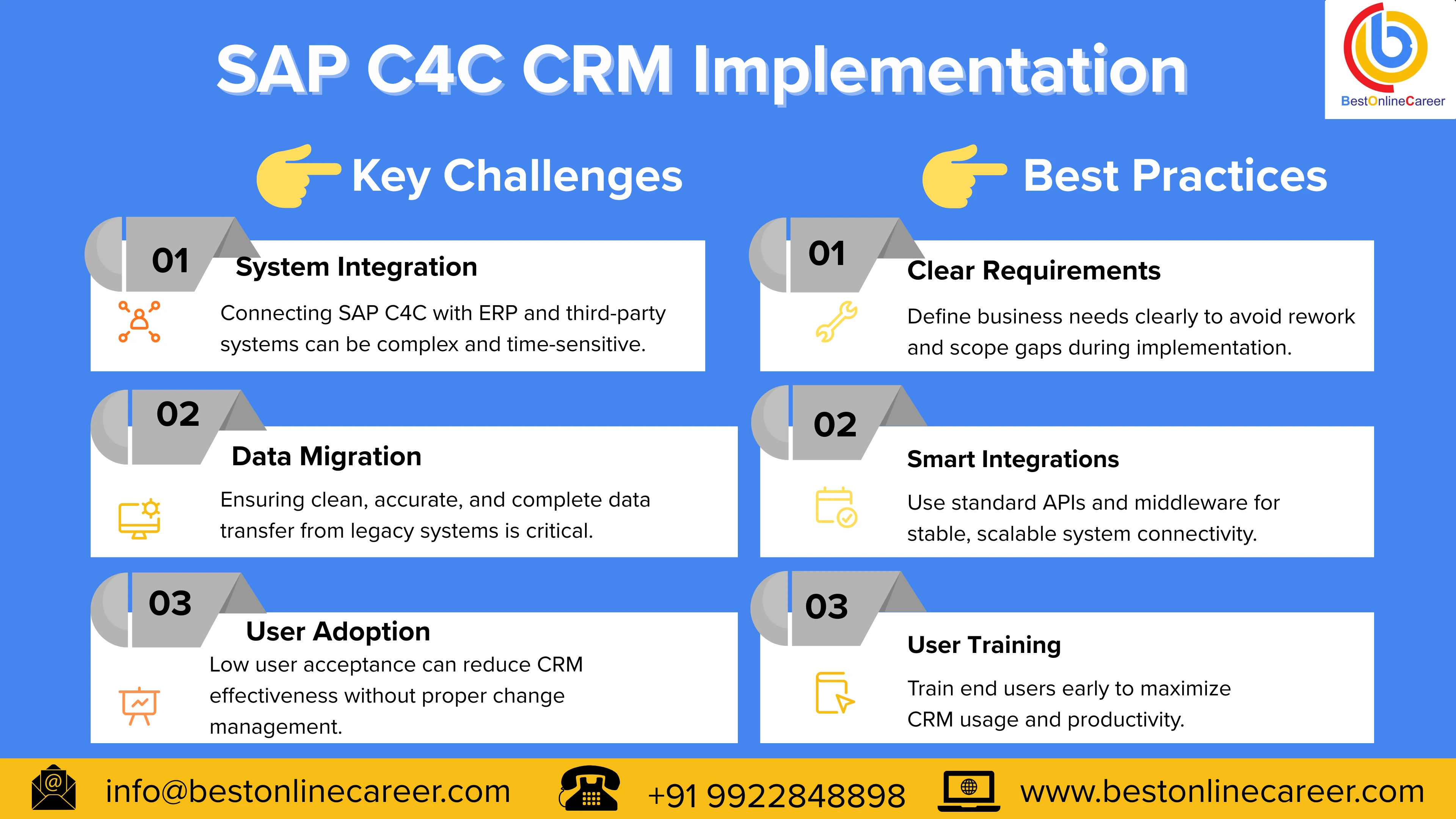
SAP C4C CRM Systems Implementation: Challenges and Best Practices
Learn essential challenges and best practices for SAP C4C CRM implementation. Expert guidance on data migration, user adoption, integration, and change management for successful deployment.

Role of SAP CPI in S/4HANA Cloud and Hybrid Integration Strategy
Learn SAP CPI's role in S/4HANA Cloud integration. Explore hybrid connectivity, API-driven architectures, and security for enterprise systems.